Hanging holiday lights without damaging your tile roof
Holiday lights should come down without leaving roof damage behind. We explain where attachments can cause trouble on South Florida tile roofs and what to settle with your installer before decorating.
 PSR Roofing Company · · 4 min read
Keep the display separate from the roofing
Before anyone hangs holiday lights, decide what the display attaches to. On a tile roof, the rounded or flat pieces you see are only part of the roof assembly. Underlayment, flashing and edge details also need to stay intact.
We often see roof trouble begin with something that seemed too small to matter: a screw added at the edge, a tile lifted to tuck in a cord, or a cracked corner after someone stepped onto the roof. A decoration does not need to be heavy to cause damage during installation or removal.
Our starting advice is simple: do not use the roof covering as a convenient mounting surface. A display supported from suitable locations away from the roofing can avoid unnecessary contact with tiles and concealed waterproofing. If your design depends on walking across the roof, change the design before installation begins.
This matters in South Florida even as the weather becomes more comfortable. A pleasant afternoon is not a reason to alter a roof detail, and rain can still expose damage left behind by decorating.
Avoid punctures, lifted tiles and forced clips
Do not let an installer drill or nail into tiles, ridge caps, roof flashing or the roof edge to hold seasonal decorations. Removing the decoration later does not remove the hole. A dab of sealant is not a substitute for a properly evaluated roof repair.
Clips need scrutiny too. The word removable does not tell you whether a clip belongs on your particular roof. A clip that requires prying up a tile, forcing material beneath it or squeezing a fragile edge can damage the roof even without a screw.
Ask your installer to explain the proposed attachment before work starts. You should be able to understand where it sits, what holds it and how it comes off. If the explanation involves lifting roofing or pushing against an edge, stop and have us assess that location.
- Keep nails, staples and screws out of roof coverings and flashing.
- Do not lift tiles to hide cords or anchor light strings.
- Do not wedge clips into tile overlaps or beneath edge metal.
- Keep decorations away from valleys and other roof drainage paths.
- Do not attach anything to roof vents or plumbing vent pipes.
Tile profiles and attachment details differ. A method used on a neighboring house is not evidence that it suits yours, even when the roofs look similar from the street.
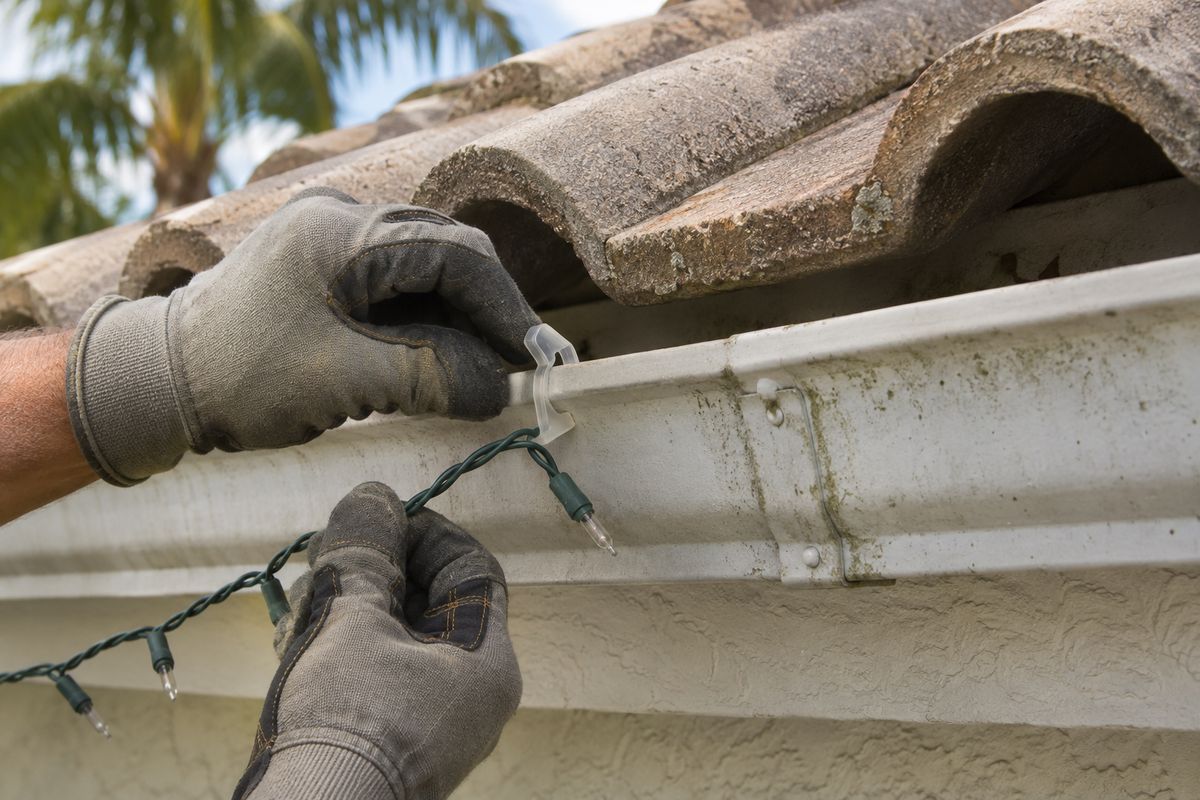
Check gutters before using them for support
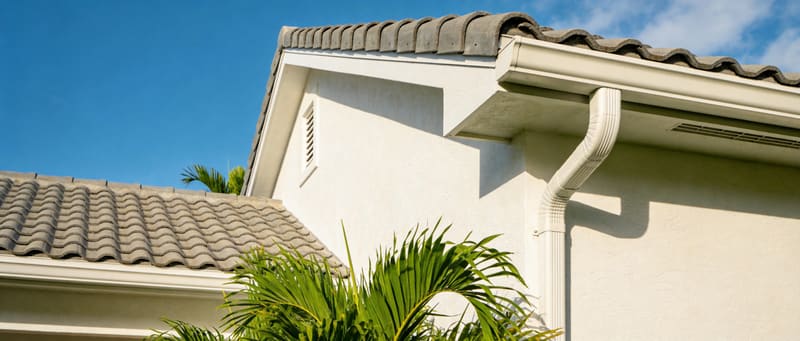
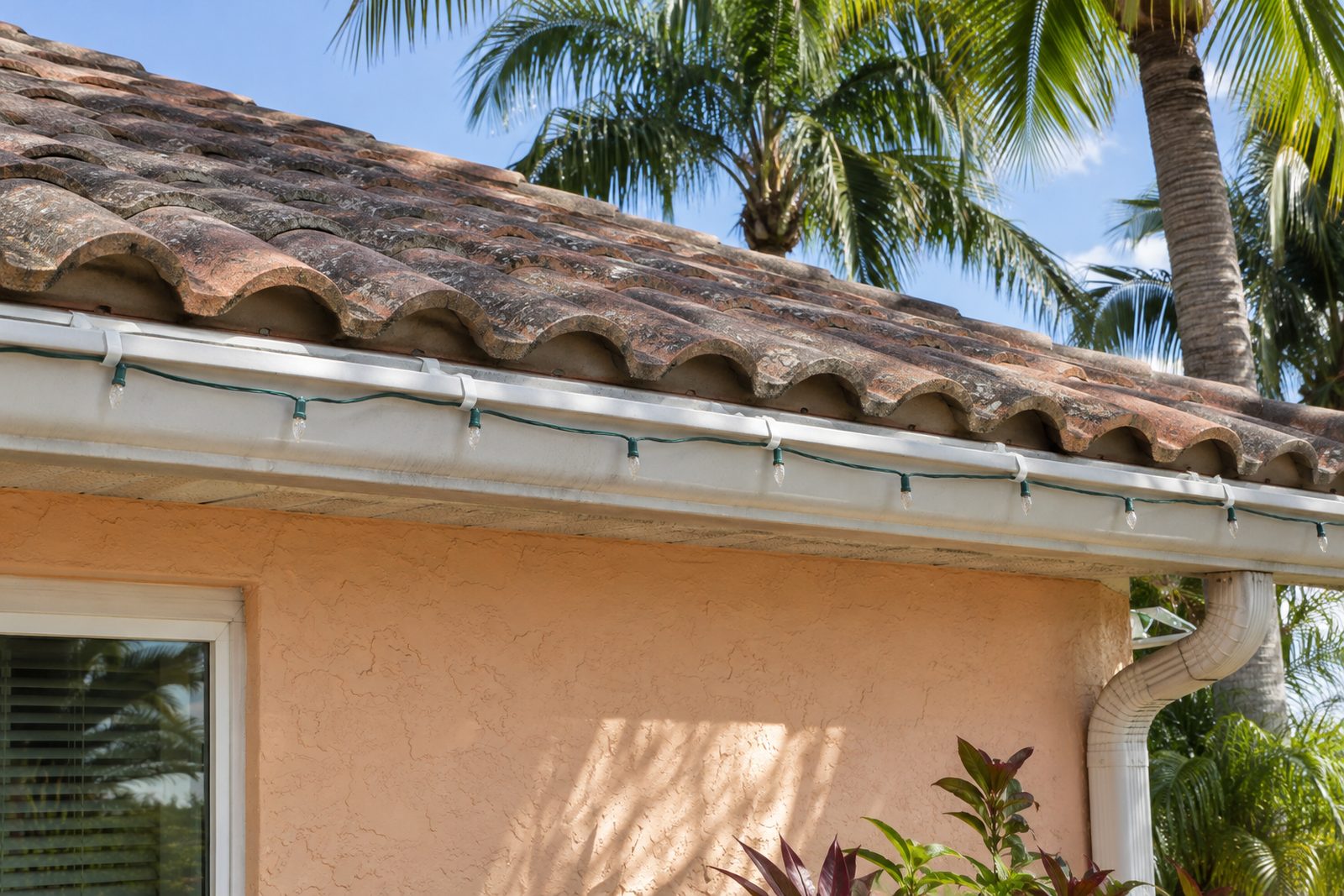
A gutter may offer an attachment location that avoids the tile itself, but it still needs to be suitable for the proposed display. Loose hangers, distorted edges and separating joints deserve attention before decorations are added. Do not use a light string to pull a sagging gutter into position.
Have your installer identify clips intended for your gutter profile and explain whether they can be installed without bending the gutter or disturbing the roof edge. Keep the display lightweight and avoid pulling strings tight around corners. A taut cord can put strain on the attachment points.
Leave the gutter channel and downspout openings clear. Cords, loose packaging and fallen decorations should not collect where roof runoff needs to travel. Palm debris and leaves already give South Florida gutters enough material to catch.
If the gutter is hidden behind an edge detail, damaged or difficult to reach, choose another decorating location. Do not improvise by reaching beneath tiles. We can review questionable roof-edge conditions during a visit for gutters and roof maintenance.
Before installation, take photographs from the ground of the gutter line and nearby tile edges. These provide a useful reference if you later notice a bent section, displaced piece or new drip.
Set roof access boundaries before the installer arrives
Tell your decorating installer that the tile roof is not an approved walking route. Concrete and clay tiles can crack under foot traffic, and damage may be difficult to see from the yard. Reaching a higher section of the display is not a reason to step onto the roof.
Ask how the installer plans to reach each attachment location without loading the gutter, leaning equipment against exposed tile edges or dragging cords across the roof. The access plan should be settled before equipment is positioned, not improvised halfway through the job.
You do not need to climb up to supervise. Discuss the boundaries from the ground and ask for photographs of any questionable area. If a tile moves or breaks, have the installer stop at that location and contact us rather than attempting an improvised patch.
- Agree on attachment locations before lights go up.
- Keep equipment and stored decorations off the roof.
- Require approval before changing the planned attachment method.
- Include careful removal in the installation arrangement.
If you already have a leak, slipped tile or loose roof-edge detail, address it before decorating. Lights can obscure an area we need to inspect or remove to complete roof repair.
Remove attachments carefully and check the roof edge
Removal deserves the same care as installation. Pulling a whole string down from the ground can snag clips, tug on gutters or dislodge material at the roof edge. Have the installer release attachments individually using suitable access equipment.
After removal, look from the ground for clips left behind, hanging cords, chipped tile edges and gutters that no longer sit as they did before. Compare the area with your earlier photographs. Do not climb onto the roof to retrieve a stubborn clip or investigate a suspected crack.
If someone made a hole, lifted a tile or applied sealant during decorating, tell us exactly where. Photographs and a clear description help us assess the affected detail. An attachment that stayed in place throughout the holiday season can still leave damage that needs attention afterward.
The best decorating plan leaves the roofing undisturbed and gives you a clear removal plan before anything goes up.
Unsure about a roof-edge attachment? Request a free roof inspection or call (866) 601-1260.
Written by PSR Roofing CompanyLicensed and insured roofers serving Miami-Dade, Broward, Palm Beach, Collier and Lee counties. 1811 NE 142nd St, Miami.