Why matching replacement roof tiles takes more than color
A replacement tile can look right from the driveway and still fit poorly on your roof. We explain how we check older tile profiles, evaluate spare tiles and plan repairs when the original tile is hard to find.
 PSR Roofing Company · · 4 min read
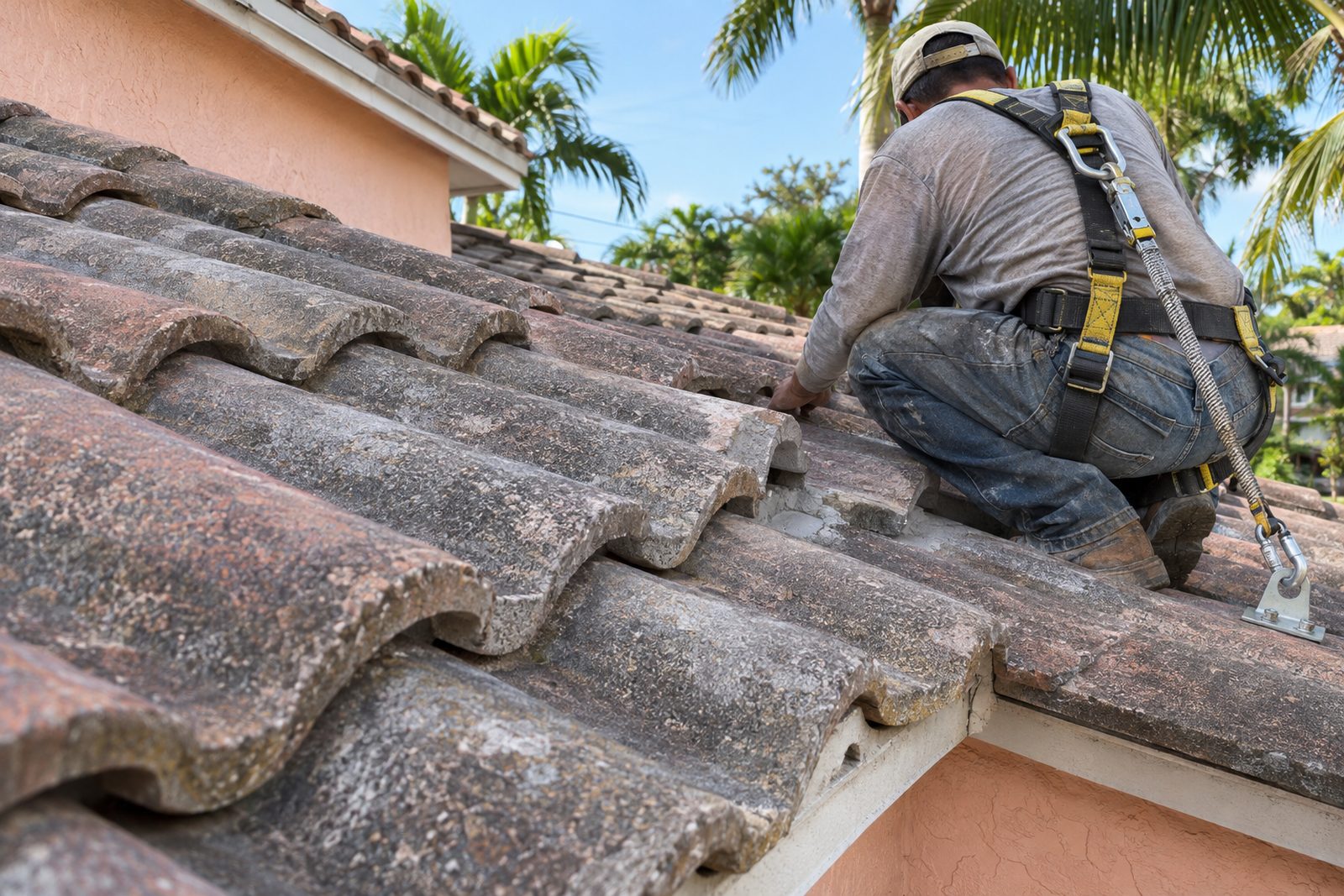
A similar color does not mean a compatible tile
You have a damaged roof tile, and a supplier has something that looks close. Before you buy it, we need to answer a different question: does that tile belong in the existing roof assembly?
Concrete barrel tiles can look nearly identical from the street while having different edges, curves and underside shapes. Flat tiles also have details you cannot judge from a photograph. A replacement needs to fit the surrounding tiles and work with the roof's attachment method, not simply blend into the color.
With holiday visitors arriving, you may want a visible repair finished quickly. Separate appearance from compatibility before approving the material. A close color match is useful only after we establish that the replacement is suitable for the roof.
Start with identification, not a shopping trip
Save any original roofing paperwork, material labels and spare tiles left from the installation. These can give us a starting point. If you have a loose tile stored safely in your garage, photograph its face, edges and underside without climbing onto the roof.
Do not remove an installed tile to find identifying marks. Lifting it can disturb neighboring pieces or concealed waterproofing. We can decide whether examining an existing loose piece or carefully accessing the roof is appropriate.
When we investigate an older tile roof, we compare the available information with the actual material. A label in a garage might belong to an earlier repair rather than the original installation. We also check whether different areas of the roof already contain different tiles.
Tell us what you know about previous repairs, additions and stored materials. You do not need to identify the tile yourself. The useful next step is collecting the clues you already have.
What we compare before accepting a replacement
A photograph helps narrow the search, but it does not establish fit. We examine how the proposed tile meets the existing pieces, how it sits and how it can be attached. Industry guidance emphasizes proper seating and interlocking when selecting replacement tiles.
- Side edges: Where the profile uses interlocking edges, the replacement must engage correctly with its neighbors.
- Upper and lower overlap: The tile needs to work with the existing arrangement of the courses.
- Underside shape: A similar-looking face can conceal a different seating surface.
- Attachment: The proposed repair needs an appropriate attachment detail, not an improvised way to hold the piece down.
- Location: Field tiles, ridge pieces and other roof details are not interchangeable simply because their colors match.
We do not accept a tile just because it can be pushed into an opening. A fit check also needs to consider whether placing it disturbs adjacent pieces. Ask us to explain the proposed material and repair method before work begins.
Stored and salvaged tiles need their own inspection
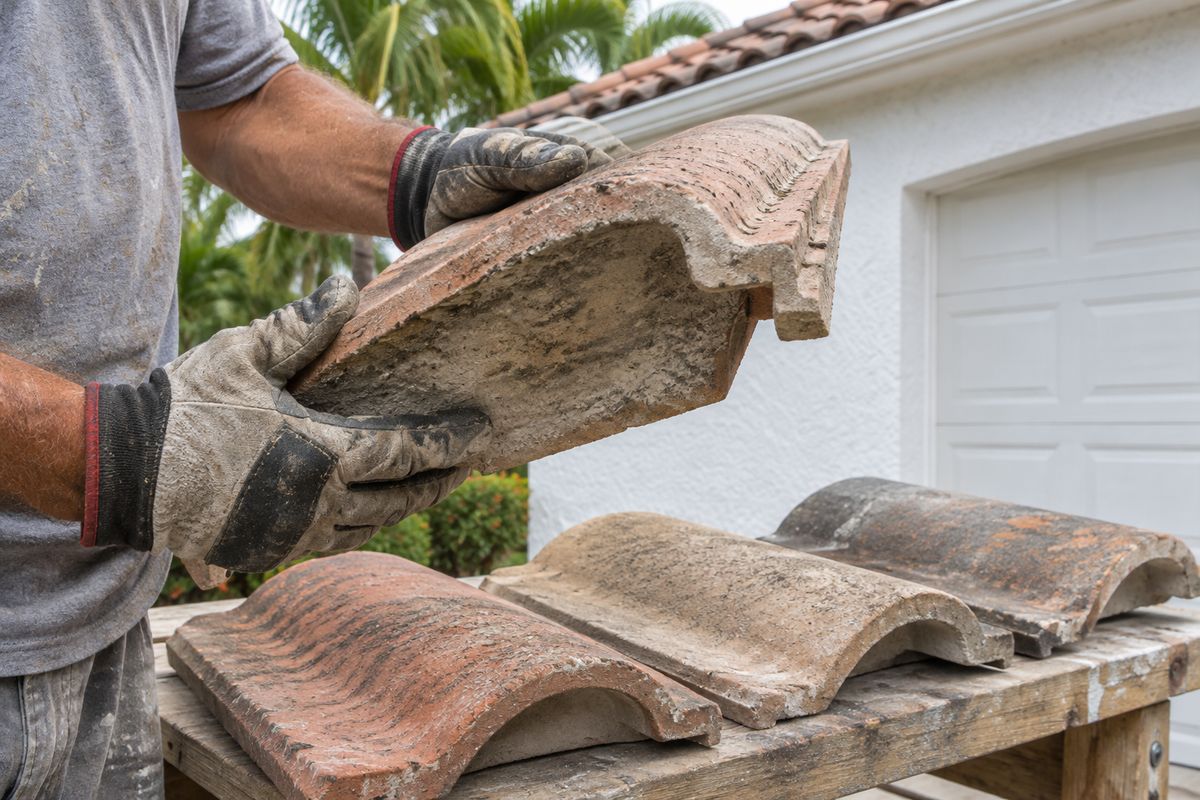
Spare tiles can be helpful, particularly when the original profile is no longer available. But a stack behind the garage is not automatically a supply of usable replacements. We check identity and condition before including those pieces in a repair plan.
Show us where the tiles have been stored and whether you know which part of the roof they came from. Keep different-looking pieces separate. Do not stack extra material on the roof or carry tiles up a ladder for us.
Salvaged material needs the same scrutiny. A seller's description of a tile as a match is a lead to investigate, not confirmation. We need to evaluate the actual pieces and whether their use is suitable for your project.
Keep appearance expectations realistic as well. Existing tiles have weathered in South Florida sun and rain. Even a compatible replacement may look different. If your association reviews exterior changes, ask your association about its requirements before approving the proposed appearance.
If the original profile is unavailable
A discontinued profile does not, by itself, answer whether you need a new roof. We first need to establish what material is present, what suitable replacements are available and what condition the surrounding roof is in.
Ask for a clear explanation of the search result. Is the original color unavailable, or is the actual tile profile unavailable? Has a proposed alternative been evaluated for compatibility? Those are different problems, and they should not be bundled into a vague statement that nothing matches.
We also separate tile sourcing from concealed damage. Finding matching pieces does not resolve deteriorated underlayment beneath them. Conversely, difficulty finding a tile is not evidence that the underlayment has failed. Our roof repair assessment should explain both conditions independently.
If a localized repair is not practical, we can discuss a broader scope and explain why. Check with your building department about project requirements. You should understand the proposed work before deciding how to proceed.
Keep a useful record after the repair
Ask for photographs of the completed area and a record identifying the replacement material. Keep that information with your roofing paperwork. If suitable spare tiles remain, store them securely at ground level and label their location in your records.
For the next repair, those records can give us a better starting point than a driveway photograph. The goal is a documented material choice and a clearly explained scope, not a promise that every replacement tile can disappear into the roof's existing appearance.
Request a free roof inspection so we can assess your tile roof and available replacements. Call (866) 601-1260.
Written by PSR Roofing CompanyLicensed and insured roofers serving Miami-Dade, Broward, Palm Beach, Collier and Lee counties. 1811 NE 142nd St, Miami.