
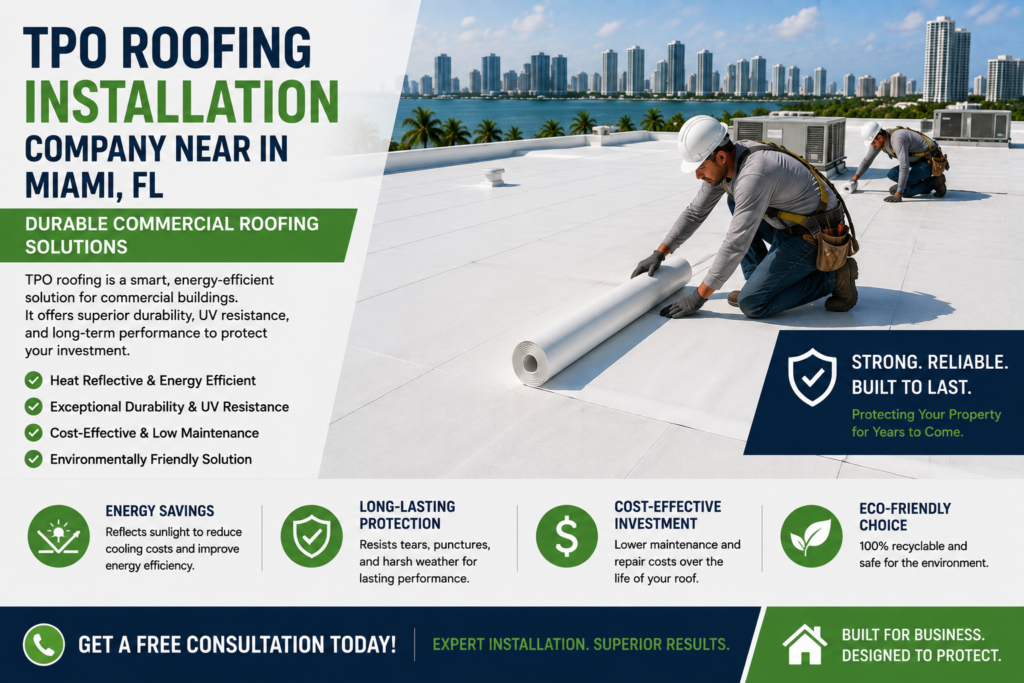
TPO Roofing Installation Company Near in Miami, FL
When Miami property owners need a dependable commercial roofing system, choosing the right material and the right contractor can make all the difference. Because South Florida experiences intense sunlight, heavy rain, high humidity, and occasional severe weather, commercial roofs must be built to handle demanding conditions. Therefore, many business owners are turning to TPO roofing for its combination of durability, energy efficiency, flexibility, and practical long-term performance.If you are searching for a TPO roofing installation company near in Miami, FL, PSR Roofing Company provides professional commercial roofing solutions designed around the needs of local properties. Rather than treating every roof the same, our approach focuses on the building, existing roof condition, drainage requirements, and long-term performance goals.
Moreover, TPO roofing can be an excellent choice for commercial buildings because it offers a strong balance between performance and value. Consequently, businesses can invest in a roofing system that helps protect their property while also supporting energy-conscious building management.
What Is TPO Roofing?
TPO stands for thermoplastic polyolefin. It is a single-ply roofing membrane commonly used on commercial and low-slope buildings. The material consists of a durable synthetic membrane designed to provide weather resistance and protect the structure underneath.
Unlike traditional roofing assemblies that may require multiple layers of different materials, TPO systems can provide an efficient roofing solution with a streamlined installation process.
Furthermore, TPO membranes are commonly available in light-colored or reflective surfaces. Because these surfaces can reflect a significant amount of solar energy, they may help reduce heat absorption across the roof.
For Miami commercial properties, this feature can be especially valuable. After all, strong sunlight and high temperatures are common throughout much of the year.
Why TPO Roofing Is Popular in Miami
Miami’s climate places continuous demands on commercial roofing systems. During hot periods, roof surfaces can experience intense solar exposure. Meanwhile, heavy rainfall can challenge drainage systems, seams, flashing, and other roofing components.
Therefore, commercial property owners need roofing materials that can perform in both heat and moisture.
TPO roofing offers several characteristics that make it attractive for Miami properties. For example, its reflective surface can help manage solar heat. Additionally, heat-welded seams can create strong connections between membrane sections.
As a result, a properly installed TPO roof can provide dependable protection while supporting the building’s overall energy strategy.
Major Benefits of TPO Roofing Installation
Choosing TPO roofing can provide multiple advantages. However, the exact benefits depend on the building, installation quality, roof design, and maintenance program.
Energy Efficiency
One of the biggest reasons businesses consider TPO roofing is energy performance. Reflective TPO membranes can reduce the amount of solar energy absorbed by the roof surface.
Consequently, the building may experience less heat transfer through the roofing assembly. This can potentially reduce cooling demand and help the HVAC system operate more efficiently.
Because Miami businesses often depend heavily on air conditioning, energy efficiency can be an important consideration when selecting a commercial roof.
Strong Heat-Welded Seams
TPO membrane sections can be joined using hot-air welding. This process creates a continuous seam between sheets when performed correctly.
Therefore, properly welded seams can provide strong resistance against water intrusion. In addition, the seam-welding process can help create a more unified roofing membrane.
However, professional installation remains essential. Even excellent materials require skilled workmanship to achieve their intended performance.
Resistance to UV Exposure
Miami roofs receive substantial sunlight throughout the year. Consequently, resistance to ultraviolet exposure is an important consideration for commercial roofing.
TPO membranes are designed to withstand outdoor exposure and provide a durable protective surface. Therefore, they can be a practical option for businesses looking for a roofing system suitable for warm, sunny environments.
Flexibility
Another advantage of TPO is its flexibility. Roofing materials can experience movement as temperatures change. Therefore, a membrane with appropriate flexibility can help accommodate normal expansion and contraction.
This characteristic can contribute to long-term roofing performance when the entire system is correctly designed and installed.
Lightweight Roofing Solution
TPO is also relatively lightweight compared with some traditional roofing assemblies. As a result, it can be suitable for a variety of commercial building applications.
Nevertheless, structural conditions should always be evaluated before installation. A professional roofing contractor can determine whether a specific TPO system is appropriate for the property.
Resistance to Moisture
Rain is another major concern for Miami commercial buildings. Because TPO membranes create a continuous protective layer, they can provide effective resistance against moisture when correctly installed.
Additionally, properly designed drainage can help move rainwater away from the roofing surface. Therefore, TPO installation should always consider both membrane performance and overall roof drainage.
TPO Roofing Installation Process
A successful TPO roof begins long before the membrane is installed. First, the roofing contractor should evaluate the existing roof and building conditions.
This assessment helps identify structural concerns, damaged areas, drainage problems, insulation requirements, and other factors that could affect the new roofing system.
Initial Roof Inspection
The first step is generally a detailed inspection of the existing roofing system. During this stage, roofing professionals look for leaks, damaged materials, ponding water, deteriorated flashing, weak areas, and other concerns.
Consequently, the inspection helps determine whether the existing roof can be recovered or whether a complete replacement is more appropriate.
Preparing the Roof Surface
Next, the roof surface must be properly prepared. Depending on the project, this may involve removing existing materials, repairing damaged areas, cleaning the substrate, or installing appropriate insulation.
Because surface preparation affects the performance of the finished system, this step should never be rushed.
Installing Insulation
In many commercial roofing systems, insulation plays an important role in thermal performance. Therefore, the appropriate insulation strategy should be considered before membrane installation.
Proper insulation can help reduce heat transfer and improve the building envelope.
Installing the TPO Membrane
Once the roof assembly has been prepared, the TPO membrane can be installed. Depending on the roofing design, the membrane may be mechanically attached, adhered, or installed using another approved method.
Furthermore, the installation method should match the building’s requirements and the manufacturer’s specifications.
Heat-Welding the Seams
After the membrane is positioned, the seams are carefully welded. Proper heat welding is particularly important because weak seams can create opportunities for moisture intrusion.
Therefore, experienced workmanship is essential during this stage.
Flashing and Detail Work
Roof penetrations, edges, drains, curbs, vents, and other transitions require careful attention. These areas can become vulnerable points if they are not properly sealed.
Consequently, professional detail work is a major part of successful TPO installation.
Final Inspection
Finally, the completed roof should be inspected carefully. Roofing professionals can review seams, flashing, drainage areas, membrane surfaces, and other components.
As a result, potential installation concerns can be addressed before the roof is placed into regular service.
TPO Roofing for Different Commercial Buildings
TPO roofing can be suitable for many types of commercial properties. However, each project should be evaluated individually.
Office Buildings
Office buildings often require comfortable indoor temperatures throughout the workday. Therefore, energy-conscious roofing can complement HVAC systems and contribute to a more comfortable environment.
Retail Stores
Retail properties also benefit from reliable roofing. Since customers and employees occupy these buildings regularly, preventing leaks and maintaining indoor comfort are important.
Additionally, reflective roofing may support energy-management goals.
Warehouses
Large warehouses often have extensive roof surfaces. Consequently, roofing material selection can have a meaningful effect on building performance.
TPO can provide a practical combination of reflective performance, weather resistance, and durability for appropriate warehouse applications.
Industrial Facilities
Industrial properties frequently have complex roofing requirements. Equipment, roof penetrations, ventilation systems, and drainage components may all need specialized attention.
Therefore, professional planning is essential when installing TPO on industrial buildings.
Why Professional TPO Installation Matters
Although TPO roofing materials are highly capable, installation quality remains one of the most important factors affecting performance.
For example, poorly prepared surfaces can affect adhesion. Likewise, incorrectly welded seams can increase the risk of water intrusion.
Furthermore, improper flashing around penetrations can create leaks even when the main membrane is installed correctly.
Therefore, hiring an experienced TPO roofing installation company near in Miami, FL can help ensure that the roofing system is installed with attention to critical details.

Common TPO Roofing Problems Caused by Poor Installation
Unfortunately, some commercial roofing problems are not caused by the membrane itself. Instead, they result from installation mistakes or inadequate maintenance.
Potential problems may include:
- Weak or inconsistent seams
- Improper flashing
- Poor drainage
- Inadequate surface preparation
- Loose membrane sections
- Incorrect attachment
- Improper detailing around penetrations
- Insufficient insulation
- Incomplete repairs
Therefore, choosing a qualified roofing contractor is an important part of protecting your investment.
TPO Roof Maintenance in Miami
Even a professionally installed roof needs ongoing maintenance. Because Miami weather can be demanding, regular inspections are particularly valuable.
For example, debris can accumulate around drains and interfere with water flow. Likewise, storms can leave behind damaged materials or expose vulnerable areas.
Therefore, commercial property owners should establish a maintenance routine.
Routine maintenance may include:
- Checking membrane condition
- Inspecting seams
- Cleaning drains
- Examining flashing
- Removing debris
- Checking roof penetrations
- Looking for standing water
- Inspecting after severe weather
- Addressing small defects promptly
By maintaining the roof consistently, property owners can potentially extend its useful service life and reduce unexpected repair costs.
Signs You May Need TPO Roof Replacement
Sometimes, repairing an existing roof is no longer the most practical solution. If your commercial roof has repeated leaks, widespread deterioration, or extensive damage, replacement may provide better long-term value.
Additionally, an aging roof may lack the energy performance available from newer roofing systems.
Watch for warning signs such as:
- Repeated leaks
- Widespread membrane damage
- Persistent ponding water
- Deteriorating seams
- Damaged flashing
- Increasing repair frequency
- Poor insulation performance
- Visible aging
- Rising maintenance costs
Therefore, if you notice several of these issues, a professional roofing evaluation can help determine the appropriate next step.
Frequently Asked Questions About TPO Roofing
How long can a TPO commercial roof last?
The service life of a TPO roof depends on membrane quality, installation, weather exposure, maintenance, drainage, and other factors. With proper installation and regular maintenance, a commercial TPO system can provide many years of dependable performance.
Is TPO roofing good for Miami’s hot climate?
Yes, TPO can be a strong option for warm climates because reflective membrane surfaces can help reduce solar heat absorption. However, proper installation and roof design are equally important.
Is TPO roofing waterproof?
TPO membranes are designed to resist water penetration. However, overall roof performance also depends on properly welded seams, flashing, penetrations, drainage, and installation quality.
Can TPO roofing reduce energy costs?
TPO roofing may help reduce cooling demand by reflecting solar energy and limiting heat absorption. However, actual energy savings depend on the entire building envelope, insulation, HVAC system, occupancy, and other factors.
Can TPO roofing be installed over an existing roof?
In some situations, TPO can be installed as a roof overlay. However, the existing roof must first be evaluated to determine whether the substrate and overall assembly are suitable for recovery.
Is TPO roofing suitable for flat commercial roofs?
Yes. TPO is commonly used on low-slope commercial roofing systems. Nevertheless, proper drainage and installation details are essential for long-term performance.
How often should a TPO roof be inspected?
Regular professional inspections are recommended. Additionally, inspections after major storms can help identify damage before minor issues become expensive repairs.
Why Choose PSR Roofing Company for TPO Installation?
Selecting a TPO roofing contractor is an important decision. After all, the quality of installation can have a direct impact on the performance and longevity of the roofing system.
At PSR Roofing Company, we understand that commercial roofing requires careful planning, precise installation, and attention to detail. Therefore, we focus on delivering roofing solutions that match the specific needs of each property.
Moreover, we understand the challenges that Miami’s climate can create for commercial buildings. From intense sunlight to heavy rainfall, your roof needs to provide reliable protection in changing conditions.
Our goal is to help property owners make informed roofing decisions while providing professional installation and dependable service.
The Value of Investing in Professional TPO Roofing
A commercial roof is more than a protective covering. Instead, it is a critical component of the building’s overall performance.
When you choose a properly designed TPO system, you can gain benefits related to weather protection, energy performance, durability, and long-term property management.
Furthermore, professional installation can reduce the likelihood of preventable roofing problems. Therefore, investing in quality workmanship today can help protect your property for years to come.
Contact PSR Roofing Company in Miami, FL
If you are searching for a TPO roofing installation company near in Miami, FL, PSR Roofing Company is ready to help with your commercial roofing needs.
Whether you are replacing an aging roof, constructing a new commercial property, or exploring a more energy-conscious roofing solution, our team can help you evaluate your options.
Instead of waiting for leaks, structural concerns, or repeated repair expenses to become larger problems, consider having your commercial roof professionally evaluated.
Contact PSR Roofing Company today to discuss your TPO roofing installation project in Miami, FL and take the next step toward a durable, energy-conscious commercial roofing solution.