Why your metal roof looks wavy
A metal roof can look smooth from the driveway and rippled from across the street. We explain the difference between surface waviness and signs that deserve a closer look.
 PSR Roofing Company · · 4 min read
What those ripples actually mean
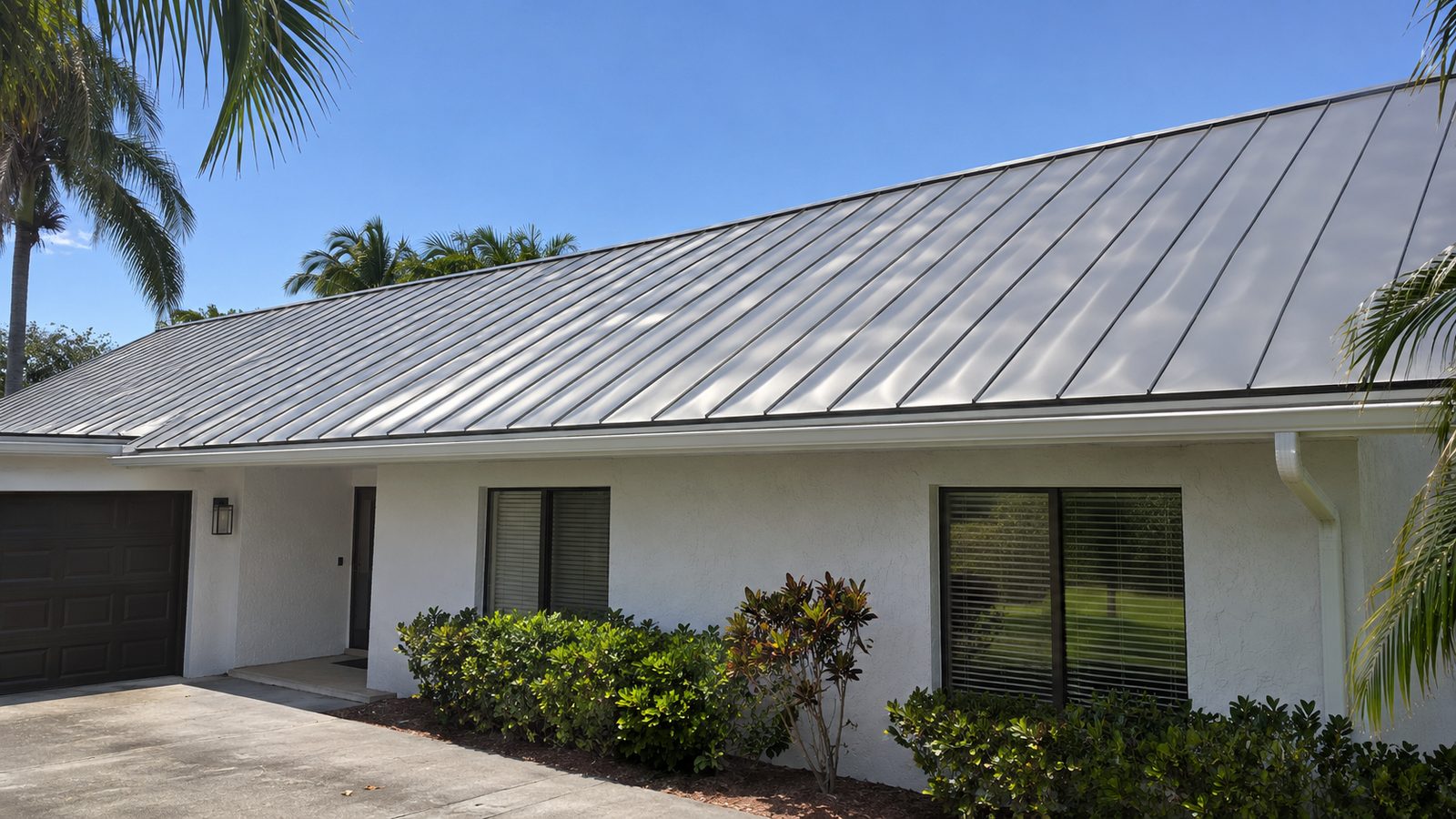
You step outside in the afternoon and notice uneven reflections between the raised seams of your metal roof. The panels looked flatter earlier. Has something moved, or did the installation go wrong?
The roofing term for visible waviness in the flat areas of metal panels is oil canning. It describes an appearance, not a diagnosis. Broad, shallow ripples can show up without an opening in the roof covering. A sharp crease, separated seam or displaced panel is a different concern.
We separate those observations before recommending work. Calling every ripple damage can lead to unnecessary repairs. Calling every distortion normal can overlook a problem with support, attachment or handling.
This discussion applies specifically to standing seam panels, where relatively broad flat areas sit between raised seams. It is not a guide to deciding whether metal is the right roofing material for your home.
Why daylight changes what you see
South Florida sunlight can make small variations in a metal surface surprisingly visible. Light striking along a roof slope produces a different reflection than light falling more directly onto it. The same panel can look different from your driveway, sidewalk and backyard.
Lower late-fall sunlight can bring those reflections into view from places where you had not noticed them before. A newly visible ripple does not, by itself, establish that the roof has recently changed.
Metal also expands and contracts as its temperature changes. Panel design and installation need to account for that movement. Restrictions on movement can contribute to distortion, but a photograph cannot tell us whether that is happening beneath a finished roof.
Before you call, take photographs from safe ground-level locations. Keep the viewpoint consistent when comparing appearances at different times. Include a wider view showing where the affected panels sit, rather than sending only a tightly cropped reflection.
Tell us whether you noticed the appearance after installation, during different lighting or after a specific event. That history helps us decide what to examine. Do not walk onto the roof to press on a ripple or test whether it moves.
What we check before suggesting a repair
When we investigate waviness, we look beyond whether a panel reflects a straight line. We examine the panel shape, seams, transitions and visible attachment details, then consider what the installation records and accessible areas can tell us.
Several conditions can contribute to the appearance. These include stresses introduced during panel forming, handling damage, uneven support beneath the panels and installation that restricts intended movement. More than one condition may be involved.
We distinguish broad surface waviness from localized damage. A dent beneath an overhanging branch, a folded panel edge and a repeating shallow ripple should not automatically receive the same explanation.
Point out any accompanying concerns:
- A seam that appears open, lifted or different from neighboring seams.
- A sharp crease or dent rather than a broad, shallow wave.
- A panel edge that has shifted or no longer sits as it previously did.
- New interior water staining or an active leak.
- A change following roof work, falling debris or strong winds.
These observations justify investigation, but they do not establish the cause on their own. If there is water entry, we trace that separately instead of assuming the most visible ripple is the source.
Some concealed details cannot be confirmed without opening part of the assembly. We explain that limitation before proposing investigative work. An appearance concern should not become permission for unexplained removal.
Discuss panel appearance before placing an order
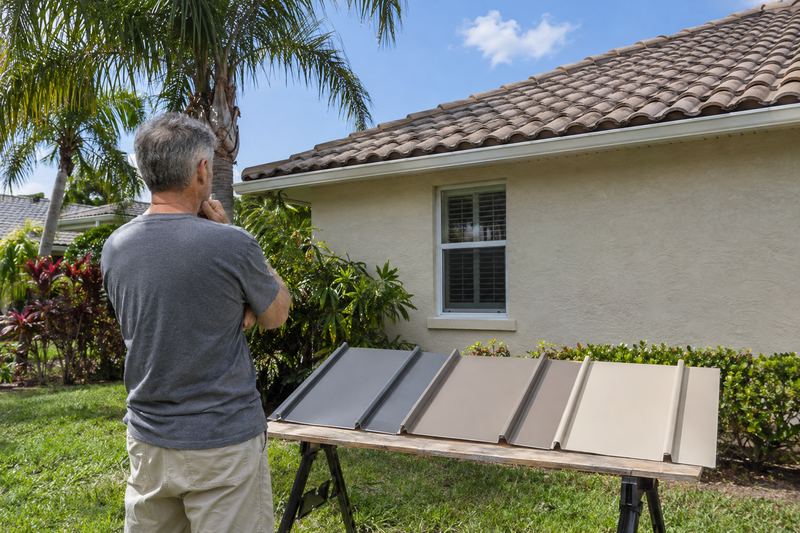
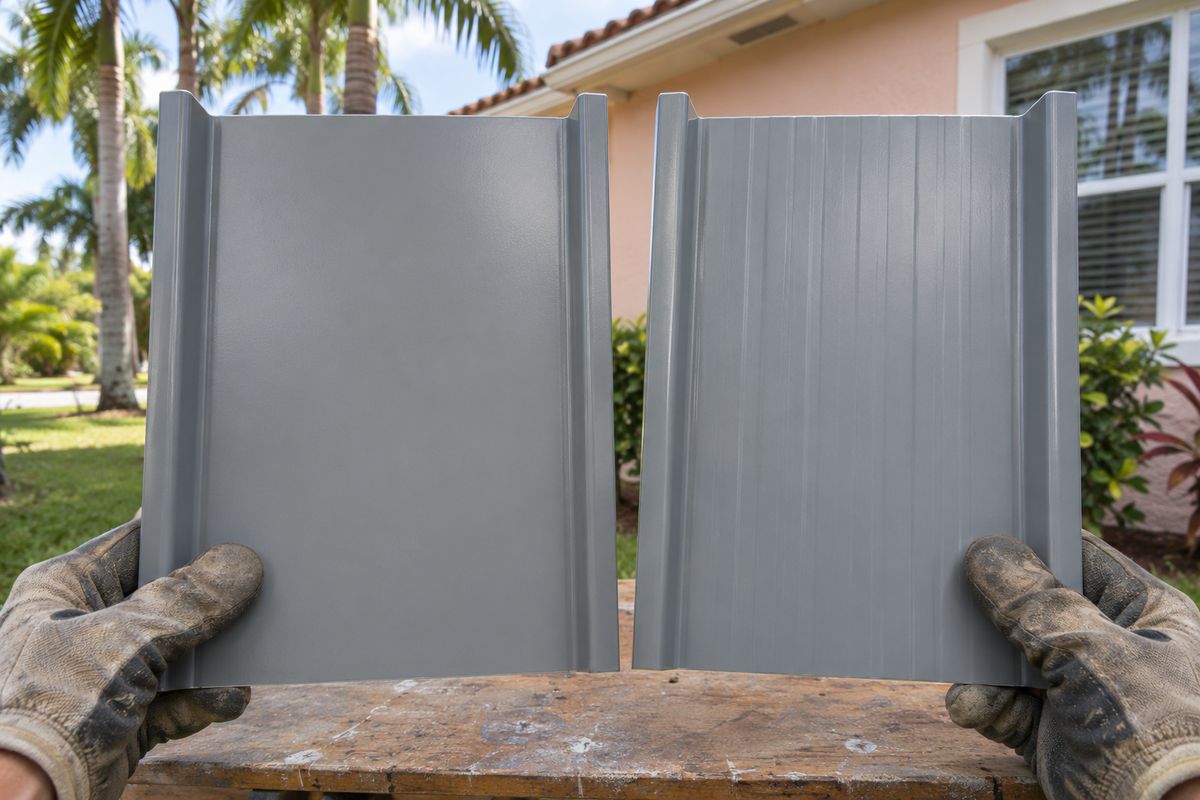
If you are planning a new standing seam roof, discuss waviness while choosing the panel profile, not after the materials arrive. A small finish sample shows color, but it does not show how a broad roof plane reflects daylight.
Ask to see a representative panel sample with the proposed surface profile. Some panels have broad smooth areas. Others include shallow ribs or striations, which are intentional lines formed into the panel surface. Those profiles change its appearance and can make waviness less noticeable.
Ask which options belong to the proposed roofing system and what tradeoffs come with them. Do not select a different panel thickness, width or attachment arrangement based only on a photograph. Those choices also need to suit the roof design and installation requirements.
Useful questions include:
- Does the proposed panel have a smooth or intentionally textured flat area?
- Can we view the sample outdoors from normal viewing positions?
- How does the proposed finish reflect sunlight?
- How is the supporting roof surface evaluated before panels are installed?
- What written information explains expected appearance and how concerns are reviewed?
Our guide to choosing a metal roof color in real daylight helps with the finish decision. Here, the separate question is how the panel surface itself may look across a roof slope.
No sample can reproduce every lighting condition on your house. The useful goal is a clear, documented selection, not an assurance that every panel looks perfectly flat from every angle.
Avoid fixes that create another problem
Do not let someone add exposed screws through a standing seam panel simply to pull down a visible wave. An improvised attachment can introduce penetrations and interfere with intended movement. Likewise, pushing, hammering or walking on the affected area is not a sensible appearance test.
Adding sealant across a ripple does not address its cause. Replacing a panel without examining the supporting conditions may leave the underlying issue unresolved.
We start by documenting what is visible and checking whether there is a performance concern. If the issue appears cosmetic, we discuss that finding plainly. If investigation identifies damage or an installation concern, we explain the proposed correction and any limits on what it can accomplish.
Keep your panel selection records, installation photographs and correspondence together. They make a discussion about appearance more specific than comparing the finished roof with an unrelated online image.
Request a free roof inspection so we can photograph what we find and discuss your next step. Call (866) 601-1260.
Written by PSR Roofing CompanyLicensed and insured roofers serving Miami-Dade, Broward, Palm Beach, Collier and Lee counties. 1811 NE 142nd St, Miami.